Tuesday, May 13, 2014

The 8IGHT WAYS Guide to Preventing Breast Cancer (Excerpt): What is Risk? What is Prevention?

An excerpt from the upcoming e-book: The 8IGHT WAYS Guide to Preventing Breast Cancer (Colditz and Dart)

What is Risk? What is Prevention? 

The word “risk” gets thrown around a lot these days.  And that’s actually a great thing, particularly when it comes to breast cancer.  By knowing your risk of breast cancer, and what factors make up that risk, you can make better informed decisions not only about your breast health but how you choose to mentally and emotionally deal with the issues of breast health and breast cancer. 

In technical – and very dry – terms, the risk of a disease is the chance of getting that disease over a certain period of time.  The most common timeframes used to describe risk are 10-year increments and something called “lifetime risk” – the chance of ever developing the disease as an adult. 

When it comes to breast cancer, lifetime risk is the one most women would recognize by the ratio “one in eight.”   “One in eight” describes an average American woman’s lifetime risk of ever developing breast cancer, meaning that out of every 8 women, 1 will develop the disease.  This translates to about a 12 percent chance of being diagnosed with breast cancer from age 18 until about age 85.

Compared to many other health risks, this is a pretty high percentage, but certainly not the highest for a major disease.  The lifetime risk of heart disease, say, is about 50 percent. 

Not surprisingly, looking at breast cancer risk in shorter 10-year segments can make things look less daunting – and in some ways provides a better sense of actual risk. Because diseases like cancer and heart disease are more common as women age – and to be blunt, because everyone eventually dies of something – lifetime risks can easily inflate the perception that a disease is more threatening than it actually is.  This is because so much of the risk accumulates very late in life.  

For some perspective, let’s look at the risks of breast cancer across a couple ten-year age groups:  the average woman’s risk of developing breast cancer from age 40 to age 50 is 1.5 percent, and from age 60 to 70 is 3.5 percent (1). This means that out of a 100 forty year old women, 1.5 would develop breast cancer by the time they turned 50.  Likewise, out of 100 fifty year old women, 3.5 would develop breast cancer by the time they turned 60.  (Of course, these are statistical “people” since you can’t have half a person.).

As expected, these 10-year risks are much smaller than the average lifetime risk of 12 percent.  Though they still show breast cancer to be a prominent disease – these risks are about three times higher than those of colon cancer for the same age groups – they also show that breast cancer is not as imminent a threat as many women fear.  It’s not uncommon for younger women to overestimate their risk of dying from the disease over the next 10 years by up to 20 times (2).

Many factors determine a woman’s risk of breast cancer, including things she has control over, like exercise and diet, and things she has little or no control over, like genetics and family history.   Focusing efforts on those factors that can be changed for the better can lower the risk of breast cancer. 

In other words, it can help prevent it. 

An Ounce (or More) of Prevention
Prevention has become a real buzzword of late, and that makes many a health professional jump for joy.  Why?  Well, let’s look at the classic “river story” parable, which we’ll paraphrase. 

A woman was walking on a riverbank and saw someone floating down the river yelling for help.  The woman picked up a large tree branch and fished the person out.  No sooner did she do that then another person came floating down.  She fished that person out.  Then another and another and another came down.  She asked others to help rescue the people. And they did.  Still, more and more came floating down, and the helpers were soon overwhelmed, realizing they couldn’t help everyone. 

The woman decided to quickly run up-river to see why so many people were falling in.  On a popular bridge over the river, she found a large, obscured hole that people were falling through.  She patched it, and people no longer fell into the river through the hole.

This story perfectly illustrates the power of prevention.  By working to stop problems early on, you can help avoid bigger, harder issues later on.  We’ll never be able to stop all the people from falling into the river.  But repairing as many holes as we’re able to can help cut way down on the number of people who fall in and need heroic rescue downstream.

It’s the same way with diseases like cancer and heart disease.  A healthy lifestyle can cut down on the number of people who develop a disease.  And although we’ll likely never be able to stop 100 percent of cancers or heart attacks, prevention still offers the most realistic, efficient, and effective way of tackling the burden of chronic diseases the world over.

References

1.         Howlader N, Noone AM, Krapcho M, Garshell J, Neyman N, Altekruse SF, Kosary CL, Yu M, Ruhl J, Tatalovich Z, Cho H, Mariotto A, Lewis DR, Chen HS, Feuer EJ, C. KA. (National Cancer Institute, Bethesda, MD, 2013).

2.         W. C. Black, R. F. Nease, Jr., A. N. Tosteson, Perceptions of breast cancer risk and screening effectiveness in women younger than 50 years of age. J Natl Cancer Inst 87, 720-731 (1995); published online EpubMay 17

Friday, May 2, 2014

Letter to the Editor on Diet and Cancer: "No Myth"

Photo: Flickr/ToastyTreat
As we mentioned in a previous post on CNiC, an article in the New York Times last week called the link between diet and cancer risk, in essence, a "myth."  In that post, we note that "the article's conclusions [about the links between diet and cancer] demonstrate a lack of understanding of the science."  To further make that point - and address a couple others - we also responded with a letter to the editor of the New York Times, printed below. 
April 21, 2014 
letters@nytimes.com 
To the Editor: 
Re: “An Apple a Day, and Other Myths.” 
There are strong links between the foods we eat and our cancer risk – for the author, George Johnson, to conclude otherwise is an incorrect interpretation of evidence that sends the wrong message at a critical time in the health of the nation.  
Cancer will become the top cause of death in the United States within the next few years, and despite hopes to the contrary, it is very unlikely that advances in diagnosis and treatment will have a major impact on the burden of the disease in the foreseeable future.  Yet, today, strong evidence shows that 50 percent or more of all cancers is preventable with relatively simple behaviors – including eating a healthy diet. 
Good studies show that too much alcohol, red meat, and processed meat as well as inadequate fruits, vegetables, and folate (found in many plant foods) have important links to cancer risk or mortality.  And other associations are developing.   
We need to do all that we can to address the growing burden of cancer.  A healthy diet is one established way to do that, and that is no myth. 
Graham A. Colditz, MD, DrPH

Wednesday, April 23, 2014

Setting the Record Straight: The Impact of Diet on Cancer Risk

Photo: Flickr/Mike65444
An article posted earlier this week on the New York Times website stated that the link between diet and cancer risk was, in essence, a "myth."  And while links between diet and cancer are not as strong as those with some other chronic diseases, like heart disease, the article's conclusions demonstrate a lack of understanding of the science.

Yesterday, the American Institute for Cancer Research (AICR) - whose reports were referenced in the piece - posted their own response to the article detailing many links between diet and cancer, with AICR Director of Research, Susan Higginbotham, PhD, RD, stating: "If there’s one thing AICR’s research has shown, and continues to show, it’s that when it comes to cancer risk, diet does matter.”

As detailed in many of our scientific publications, consumer brochures, and risk assessment tools, we agree. Diet has an important impact on cancer risk.  Calories alone, and the weight gain they can cause, can impact at least 11 different cancers.  Too much alcohol is a key risk factor for colon and breast cancer - even at moderate levels of intake.  Fruits and vegetables can lower the risk of certain types of breast cancer.  Too much red meat - particularly processed meats - can substantially increase colon cancer risk.  Adequate calcium and vitamin D can lower colon cancer risk. And inadequate folate (a B vitamin found in many plant foods) has been linked to overall cancer mortality.  Strong associations with other dietary risk factors are quickly developing.

The message that cancer is a disease that can be prevented is extremely important.  It is also a message that is still just gaining momentum with both physicians and the public.  To greatly downplay the potential impact of diet on cancer risk is not true to the science and can lead to important missed opportunities for prevention.

--

Prevention Resources

Our 8IGHT WAYS® series is filled with great tips for improving your health and lowering cancer risk.
8IGHT WAYS to Stay Healthy and Prevent Cancer  
8IGHT WAYS to Prevent Breast Cancer 
8IGHT WAYS to Prevent Colon Cancer 
CANCER SURVIVORS' 8IGHT WAYS to Stay Healthy After Cancer

Our popular risk assessment tools are also great resources for learning about your risk and getting personalized prevention plans.
Your Disease Risk website 
Zuum - Health Tracker app for iPad

Sunday, March 16, 2014

Health behavior interventions prevent incidence and death from cancer

Flickr/NatalieMaynor
At the annual meeting of the American Society for Preventive Oncology, I had the privilege of presenting the evidence that supports the potential for health behaviors and vaccines to have a huge payoff for prevention of cancer throughout the world. My slides from that talk are now available.

Questions that I addressed include the challenge of “where is prevention delivered" and “how long will we wait to accrue the benefits of prevention”. We have previously documented many barriers to preventing cancer by acting on what we already know (1). In this presentation, I focused more on the global cancer prevention challenges since lifestyle interventions will pay off at a lower cost and greater return than building health services to diagnose and treat the ever-increasing burden of cancer (2).

Tobacco control remains the highest priority in high-income countries and in low and middle-income countries to prevent the 30% or more of cancer that is caused by smoking cigarettes (3). Data from the prospective Nurses’ Health Study demonstrate that cessation from smoking provides greater benefits through reduction of lung cancer mortality than does CT screening (4). More importantly, smoking cessation reduces total mortality by 50% overall, and within 15 years of stopping smoking (4). On the other hand, screening for lung cancer reduces lung cancer mortality, but obviously does not reduce mortality from heart disease and stroke, or the many cancers at other sites (such as bladder and kidney) that are caused by smoking but are not detected by lung cancer screening.

Infections are a major cause of cancer in all countries (5). In high-income countries around 7% of cancers are caused by infections. However in low and middle-income countries the contribution of infections increases to approximately 25%. Vaccines clearly reduce cancer risk. Hepatitis B vaccine, now widespread, reduces liver cancer (6).

Beyond smoking cessation (7) and vaccination programs what should our prevention priorities be? Recent evidence following women prospectively after they were classified according to how closely they adhere to the American Cancer Society nutrition and physical activity guidelines (8) shows that those who are normal weight, eat mainly a plant-based diet, limit their alcohol intake, and are physically active, have significantly reduced incidence of cancer (9). During 12 years of follow-up within this cohort, women adhering to the ACS guidelines had a 22% reduction in diagnosis of new cases of breast cancer and 52% reduction in colon cancer (after adjusting for all other risk factors). Importantly, following the ACS guidelines also significantly reduced mortality (9).

In our research published last year, we also showed that avoiding a known breast carcinogen leads to lower risk of cancer (10). Following the women in the Nurses’ Health Study II, those who avoided alcohol in their adolescent years and before their first pregnancy, had significantly lower risk both of premalignant or precursor breast lesions (proliferative benign breast disease) and of invasive breast cancer through the premenopausal years. Avoiding carcinogens keeps risk low.

Valuing the payoff from prevention
This is complex. One such estimated for childhood vaccination uses the example of South Africa. Benefit gains include healthcare cost savings, productivity of parents attending to the care of sick children, productivity of the children as they grow to attend school and then enter the workforce (11). Externalities in the community are achieved even by the unvaccinated community members. This is due to the overall increases in wellness. These benefits have to be added to the reduction in incidence and mortality of disease as a direct consequence of vaccination. The same range of benefits accrue for hepatitis vaccination where data from Asian countries clearly show that vaccination reduces sickness, time lost from work and associated productivity, mortality, etc. Vaccination reduces the cost of health services and increases life expectancy (12, 13).

This same approach applies to the benefits of quitting smoking and is summarized in the Surgeon General’s Report released earlier in 2014(3). When smokers quit smoking their quality of life improves significantly. For the employer, absenteeism is lower in never smokers than in current smokers, and health care costs are reduced with smoking cessation, as is the subsequent risk of many chronic conditions. These benefits accrued over decades.

Alcohol a known carcinogen
While prevention messages support strategies to reduce alcohol consumption, the risks and benefits of consumption vary disproportionately by age. The societal hazards of alcohol intake include motor vehicle accidents, risky sexual behavior, violence and injuries. The adverse effects accrue in adolescent and early adult years. The risks of cancer and benefits of cardiovascular protection are observed decades later, after the consequences and toll on society due to motor vehicle accidents and alcohol related deaths.

Some question whether weight loss prevents cancer
A recent meta-analysis shows significant benefits for weight loss after bariatric surgery (14). The reduction in cancer is significant in women but not men. The limited number of cancer cases precludes an analysis of risk reduction according to cancer site. In a previous analysis, we showed that bariatric surgery and the subsequent associated weight loss is cost-effective and can be cost saving (15).

In contrast with the benefits of prevention, we currently spend billions of dollars on cancer care in the United States. Hassett and Elkin estimate we spent 125 billion on cancer care in 2010 (16). Furthermore, 13% of all cancer expenditures were for breast cancer. Given the increasing burden of cancer at a system or societal level, these costs are not sustainable for the US or, in fact, for low and middle-income countries (2, 16). In a detailed analysis of the cost-effectives of cancer care, Greenberg et al estimated that the incremental cost for treatment and improved outcomes generating an additional year of life is $27,000 for breast cancer and more for an additional year of life for treatment of patients with other cancer diagnoses (17). With the number of new cases of cancer in the US continuing to increase each year as our population ages (18), the growth in health-care costs for cancer is viewed as unsustainable (16). Cost related decisions are therefore inevitable. At the global level, even greater emphasis on effective low-cost treatment and broad access to this treatment becomes a top priority (2).

Cancer prevention works
Garnering greater resources and priority to implement effective cancer prevention must be our highest priority.


References
1. G. A. Colditz, K. Y. Wolin, S. Gehlert, Applying what we know to accelerate cancer prevention. Sci Transl Med 4, 127rv124 (2012); published online EpubMar 28 (10.1126/scitranslmed.3003218).

2. K. Chalkidou, P. Marquez, P. K. Dhillon, Y. Teerawattananon, T. Anothaisintawee, C. A. Gadelha, R. Sullivan, Evidence-informed frameworks for cost-effective cancer care and prevention in low, middle, and high-income countries. Lancet Oncol 15, e119-e131 (2014); published online EpubMar (10.1016/S1470-2045(13)70547-3).

3. U.S. Department of Health and Human Services, "The Health Consequences of Smoking—50 Years of Progress: A Report of the Surgeon General. ," (U.S. Department of Health and Human Services, Centers for Disease Control and Prevention, National Center for Chronic Disease Prevention and Health Promotion, Office on Smoking and Health,, Atlanta, GA, 2014.).

4. S. A. Kenfield, M. J. Stampfer, B. A. Rosner, G. A. Colditz, Smoking and smoking cessation in relation to mortality in women. JAMA 299, 2037-2047 (2008); published online EpubMay 7 (10.1001/jama.299.17.2037).

5. C. de Martel, J. Ferlay, S. Franceschi, J. Vignat, F. Bray, D. Forman, M. Plummer, Global burden of cancers attributable to infections in 2008: a review and synthetic analysis. Lancet Oncol 13, 607-615 (2012); published online EpubJun (10.1016/S1470-2045(12)70137-7).

6. M. H. Chang, S. L. You, C. J. Chen, C. J. Liu, C. M. Lee, S. M. Lin, H. C. Chu, T. C. Wu, S. S. Yang, H. S. Kuo, D. S. Chen, Decreased incidence of hepatocellular carcinoma in hepatitis B vaccinees: a 20-year follow-up study. Journal of the National Cancer Institute 101, 1348-1355 (2009); published online EpubOct 7 (10.1093/jnci/djp288).

7. J. M. Lightwood, A. Dinno, S. A. Glantz, Effect of the California tobacco control program on personal health care expenditures. PLoS Med 5, e178 (2008); published online EpubAug 26 (10.1371/journal.pmed.0050178).

8. L. H. Kushi, C. Doyle, M. McCullough, C. L. Rock, W. Demark-Wahnefried, E. V. Bandera, S. Gapstur, A. V. Patel, K. Andrews, T. Gansler, N. American Cancer Society, C. Physical Activity Guidelines Advisory, American Cancer Society Guidelines on nutrition and physical activity for cancer prevention: reducing the risk of cancer with healthy food choices and physical activity. CA Cancer J Clin 62, 30-67 (2012); published online EpubJan-Feb (10.3322/caac.20140).

9. C. A. Thomson, M. L. McCullough, B. C. Wertheim, R. T. Chlebowski, M. E. Martinez, M. L. Stefanick, T. E. Rohan, J. E. Manson, H. A. Tindle, J. Ockene, M. Z. Vitolins, J. Wactawski-Wende, G. E. Sarto, D. S. Lane, M. L. Neuhouser, Nutrition and Physical Activity Cancer Prevention Guidelines, Cancer Risk, and Mortality in the Women's Health Initiative. Cancer Prev Res (Phila) 7, 42-53 (2014); published online EpubJan (10.1158/1940-6207.CAPR-13-0258).

10. Y. Liu, G. A. Colditz, B. Rosner, C. S. Berkey, L. C. Collins, S. J. Schnitt, J. L. Connolly, W. Y. Chen, W. C. Willett, R. M. Tamimi, Alcohol intake between menarche and first pregnancy: a prospective study of breast cancer risk. Journal of the National Cancer Institute 105, 1571-1578 (2013); published online EpubOct 16 (10.1093/jnci/djt213).

11. T. Barnighausen, D. E. Bloom, D. Canning, J. O'Brien, Accounting for the full benefits of childhood vaccination in South Africa. S Afr Med J 98, 842, 844-846 (2008)

12. H. F. Hung, T. H. Chen, Probabilistic cost-effectiveness analysis of the long-term effect of universal hepatitis B vaccination: an experience from Taiwan with high hepatitis B virus infection and Hepatitis B e Antigen positive prevalence. Vaccine 27, 6770-6776 (2009); published online EpubNov 12 (10.1016/j.vaccine.2009.08.082).

13. S. Q. Lu, S. M. McGhee, X. Xie, J. Cheng, R. Fielding, Economic evaluation of universal newborn hepatitis B vaccination in China. Vaccine 31, 1864-1869 (2013); published online EpubApr 3 (10.1016/j.vaccine.2013.01.020).

14. M. C. Tee, Y. Cao, G. L. Warnock, F. B. Hu, J. E. Chavarro, Effect of bariatric surgery on oncologic outcomes: a systematic review and meta-analysis. Surgical endoscopy 27, 4449-4456 (2013); published online EpubDec (10.1007/s00464-013-3127-9).

15. S. H. Chang, C. R. Stoll, G. A. Colditz, Cost-effectiveness of bariatric surgery: should it be universally available? Maturitas 69, 230-238 (2011); published online EpubJul (10.1016/j.maturitas.2011.04.007).

16. M. J. Hassett, E. B. Elkin, What does breast cancer treatment cost and what is it worth? Hematology/oncology clinics of North America 27, 829-841, ix (2013); published online EpubAug (10.1016/j.hoc.2013.05.011).

17. D. Greenberg, C. Earle, C. H. Fang, A. Eldar-Lissai, P. J. Neumann, When is cancer care cost-effective? A systematic overview of cost-utility analyses in oncology. J Natl Cancer Inst 102, 82-88 (2010); published online EpubJan 20 (10.1093/jnci/djp472).

18. B. Edwards, H. L. Howe, L. Ries, M. J. Thun, H. M. Rosenberg, R. Yancik, P. A. Wingo, A. Jemal, E. G. Feigal, Annual report to the Nation on the State of Cancer, 1973-1999, Featuring implications of age and aging on the U.S. cancer burden. Cancer 94, 2766-2792 (2002).

Friday, February 21, 2014

Take a Tour of the Zuum Risk Assessment App


With some exciting projects coming down the pike for our Zuum risk assessment app for iPad, it seemed a great time to re-introduce Zuum with a video demonstration of all that it does.  Its engaging interface and strong evidence base make it a unique addition to the field of mHealth offerings.  With just a 2 - 3 minute questionnaire, the app provides a risk estimate of six major diseases, details the factors that make up the risk of each disease, and puts together a personalized prevention plan.   Coming out of Washington University School of Medicine, Zuum is also free of the types of conflicts linked with many other apps.  Users' information is never sold, leased, or shared with third parties.


Tuesday, February 4, 2014

Preventing Cancer Today. Over 50% of New Cancer Cases Can be Prevented by acting on What We Know Right Now

by Graham A. Colditz, MD, DrPH

Much attention is being placed today on the global burden of cancer and the power for prevention to have an enormous benefit for the world through reducing cancer incidence, diagnosis, treatment, pain, and suffering.

A reminder on numbers that have been around for some time – more than half of cancer is diagnosed in low and middle income countries, where access to care is often limited.

Data from the World Health Organization for 2012 (1) show that an estimated 14 million new cases of cancer were diagnosed, and the number is rising every year. The most common cancers diagnosed were those of the:
  • lung (1.8 million cases, 13.0% of the total)
  • breast (1.7 million, 11.9%)
  • colorectal cancer (1.4 million, 9.7%)

Of course, breast cancer is the leading cause of cancer diagnosis among women, where it accounts for 25% of all cancer diagnosed. The 11.9% misleads as these cases occur in about half the population (25% is more accurate: 1.7 million breast cancer cases among the total of all new cancer cases diagnosed among women, 6.7 million total new cases = 25%).

We should be outraged that so few resources and little prevention effort is going to this disease. Much is focused on high-risk women and those at older ages, such as after 50 (2). But some 25% of all breast cancers are diagnosed among women under age 50. We must start prevention far earlier in life to reduce the burden of this disease.

Prevention works.

Cigarette smoking has declined and lung cancer mortality has decreased by one third in the past 20 years. Mortality from lung cancer peaked at 91.1 per 100000 men in 1990 and has declined to 60.3 per 100,000 men in 2010. This is one third fewer lung cancer deaths (3). Stopping smoking reduces lung cancer but also death from heart disease, stroke, and many other cancers too. It is time we focused the same attention on prevention of breast and other cancers, while maintaining our program of prevention of smoking (4). Alcohol, a known carcinogen and cause of breast cancer, needs more attention. We have shown that intake during adolescent and early adult years is significantly related to increased risk of invasive breast cancer and also premalignant breast lesions (5,6).

The World Health Organization recommends policies to limit alcohol intake and to encourage a healthy diet as “best buys” for prevention of chronic diseases (7). For breast cancer, the leading malignancy in women, we must refine the focus of the recommendations and recognize that prevention messages and action must begin early in life and be sustained. We must help women understand that breast cancer prevention strategies will vary according to their age, and that some prevention (childhood diet and exercise) is under the control of mothers and grandparents. Avoidance of alcohol, for example, may be particularly beneficial for young women (6). Improving the presentation of prevention messages for each stage of a women’s life is a top priority.

Today, we should focus again on cancer prevention and the potential for action with what we know already. For more details, visit our recent post in the Huffington Post - 
Half of Cancers Are Preventable: Lower Your Risk With These 8 Steps.

Additional resources for cancer prevention can be found on our page: Preventing Cancer - Today.

References

1. International Agency for Research on Cancer. GLOBOCAN 2012: estimated cancer incidence, mortality and prevalence worldwide in 2012. 2012; Section on Cancer Information. Available at: http://globocan.iarc.fr/Pages/fact_sheets_cancer.aspx. Accessed Jan 26, 2014, 2014.

2. Visvanathan K, Hurley P, Bantug E, et al. Use of pharmacologic interventions for breast cancer risk reduction: American Society of Clinical Oncology clinical practice guideline. J Clin Oncol. Aug 10 2013;31(23):2942-2962.

3. National Center for Health Statistics. Health, United States, 2012: With Special Feature on Emergency Care. Hyattsville, MD: U.S. Department of Health and Human Services, Centers for Disease Control and Prevention; 2013.

4. Koh HK, Sebelius KG. Ending the tobacco epidemic. JAMA. Aug 22 2012;308(8):767-768.

5. Liu Y, Tamimi RM, Berkey CS, et al. Intakes of alcohol and folate during adolescence and risk of proliferative benign breast disease. Pediatrics. May 2012;129(5):e1192-1198.

6. Liu Y, Colditz GA, Rosner B, et al. Alcohol intake between menarche and first pregnancy: a prospective study of breast cancer risk. Journal of the National Cancer Institute. Oct 16 2013;105(20):1571-1578.

7. World Health Organization. Global Action Plan for Prevention and Control of Noncommunicable Diseases, 2013-2020. http://www.who.int/cardiovascular_diseases/15March2013UpdatedRevisedDraftActionPlan.pdf: World Health Organization,; March 15, 2013 2013.

Thursday, November 21, 2013

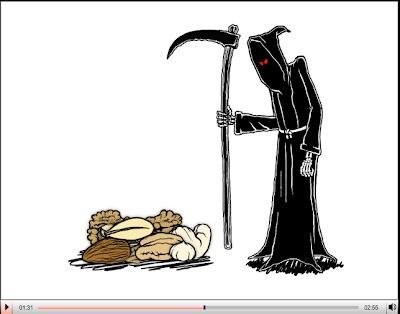
(Video) Nuts Cut Risk of Cancer, Heart Disease, and Early Mortality

Earlier this month, we posted about recent findings linking nut consumption with a lower risk of benign breast disease in young women.  Further confirming the power of nuts, new results from a large study published in the New England Journal of Medicine reports that men and women who are frequent nut eaters (7 or more time per week) have a lower risk of heart disease and cancer, as well as a 20 percent lower risk of early death than those who rarely eat nuts (less than once per week).

We could further summarize the findings, but this short animated video put out by the Journal does a very good job.

Overall, the evidence is quite compelling that nuts are an important part of a healthy diet and healthy lifestyle.  Just a few ounces of whole nuts or peanut butter a week can have real benefits, and you don't need to be fixated on peanuts.  Other types of nuts or nut-butters have benefits as well and also taste great. So, more than ever, you have license to go nuts.