Showing posts with label mortality. Show all posts

Tuesday, May 9, 2017

Stark Inequality: Study Finds 20-Year Difference in Life Expectancy Between Counties in United States


By Hank Dart

Differences in life expectancy in the United States can vary greatly depending on the county in which you live.  That's the finding of a new analysis out of the University of Washington and published in the journal JAMA Internal Medicine.

Using data from the Human Mortality Database, National Center for Health Statistics, and U.S. Census Bureau, researches calculated the average life expectancies of counties between the years 1980 and 2014.  They also assessed factors in the counties that could impact health - and therefore life expectancy - such as health behaviors, socioeconomic status (SES), and access to health care.

The analysis revealed a very large 20-year difference in life expectancy between the counties with the longest life expectancy and those with the shortest.  While average life-expectancy for women and men combined was 79 years in 2014, counties with the highest life-expectancy averaged 87 years.  Those with the lowest averaged just 66 years. Comparing the top 1 percent of counties with the lowest 1 percent, the life-expectancy gap was 11 years. Comparing the top 10 percent of counties with the lowest 10 percent, the gap was 6 years.

Counties on the lower half of the Mississippi River and those on some Native American reservations in South and North Dakota had some of the lowest life expectancy in the nation, while those in central Colorado Counties had some of the highest.  A related online dynamic tool allows users to explore life expectancy and mortality rates for counties across the nation.


Looking at trends since 1980, the researchers conclude that inequality in life expectancy in United States is "large and increasing."  Though such inequality has dropped in younger groups, it remains stark in older groups and populations as a whole.

In trying to tease out the causes of these disparities, the researchers found that certain health and behavioral factors had the biggest influence.  Obesity, lack of physical inactivity, smoking, high blood pressure, and diabetes were found to account for 74 percent of the life expectancy differences between counties.

This new analysis further confirms the importance of addressing growing inequality in the United States. Populations with lower incomes, less education, and more discrimination are more likely to suffer from lifestyles and diseases that result in premature mortality.  Programs and policies need to be put in place to narrow these gaps and address these issues.

How long you live and how healthy you are should not depend on where you live.  Right now, it can.  And we need to change that.

Thursday, April 13, 2017

Large Study Further Confirms Overweight & Obesity Increase Risk of Premature Death

 A "normal" weight - with BMI between 22.5 and 24.9 - was linked to lowest risk

by Hank Dart

It turns out that a healthy weight is a healthy weight. That's the essential conclusion of a large and well-designed new study looking at long term weight and its relation to premature death.

What makes this seemingly common sense finding especially newsworthy is that it runs counter to some recent high-profile studies that have concluded that being overweight or slightly obese may actually provide the best protection against premature mortality, even more so than being at what is classified as a "normal" or "healthy" weight.

Not surprisingly, these past "obesity paradox" studies made a splash in both the media and scientific circles, grabbing headlines the world over.

Yet, many researchers had concerns about the design of these studies, and therefore the

trustworthiness of their findings. The main issue was that the studies did not seem to adequately take into account smoking status and pre-clinical disease, which can have an important impact on both weight and the risk of death. Pre-clinical disease is an illness that has not yet been diagnosed but that can lead to weight loss and increased risk of dying. And weight loss from such illness can happen many years before it is diagnosed. Likewise, smokers also tend to weigh less and have a higher risk of dying. Unless a study is designed correctly, each of these factors can incorrectly sway results to show that being a normal weight increases the risk of death, and being overweight lowers risk.

This new study, performed by researchers at the Harvard School of Public Health and Harvard Medical School, was design to address such issues by using participants' maximum weight over a 16-year period. This way, the impact of weight loss due to pre-clinical disease could be limited. A participant with a maximum weight in the "normal" category, for example, would not have gotten there by losing weight -- such as due to an unknown illness.


Following 225,000 middle-aged men and women for another 8 - 20 years, the researchers found a steady increase in risk of premature death with overweight and obesity, compared to normal weight (see figure). Underweight also increased risk in women. The lowest risk of premature death was with a body mass index (BMI) between 22.5 - 24.9, which is a weight of 148 - 164 pounds for someone 5 feet, 8 inches tall.


While these findings are not necessarily surprising - since they fall in line with the guidelines for healthy weight and unhealthy weight - they are quite an important counter to the widespread "obesity paradox" coverage. Next to smoking, weight is the most important health issue in the nation - and increasingly the globe. In addition to lowering quality of life, overweight and obesity increase the risk of heart disease, diabetes, stroke, osteoarthritis, liver disease, and thirteen different cancers. 

Working to maintain a healthy weight remains one of the best things people can do for their health and well-being.  While it's not easy, it's certainly worth it. 


See our recent post for simple tips to help keep weight in check.


http://www.cancernewsincontext.org/2017/03/12-little-things-that-can-put-hitch-in.html

Photo: Mini-me-7 by Marcel Oostervijk (CC License, CC BY-SA 2.0) (Edited: Cropped)

Thursday, November 21, 2013

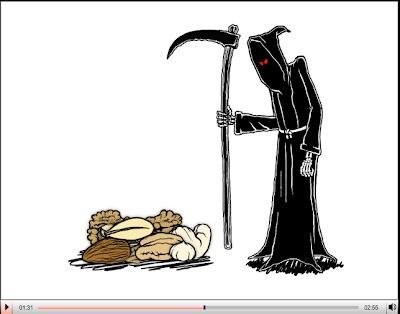
(Video) Nuts Cut Risk of Cancer, Heart Disease, and Early Mortality

Earlier this month, we posted about recent findings linking nut consumption with a lower risk of benign breast disease in young women.  Further confirming the power of nuts, new results from a large study published in the New England Journal of Medicine reports that men and women who are frequent nut eaters (7 or more time per week) have a lower risk of heart disease and cancer, as well as a 20 percent lower risk of early death than those who rarely eat nuts (less than once per week).

We could further summarize the findings, but this short animated video put out by the Journal does a very good job.

Overall, the evidence is quite compelling that nuts are an important part of a healthy diet and healthy lifestyle.  Just a few ounces of whole nuts or peanut butter a week can have real benefits, and you don't need to be fixated on peanuts.  Other types of nuts or nut-butters have benefits as well and also taste great. So, more than ever, you have license to go nuts.

Tuesday, July 23, 2013

Obesity Cuts Life Short

More than 15 yeas ago we showed conclusive evidence that obesity causes many chronic conditions in the US population1-3 -, that weight gain increases risk of diabetes 4-6, heart disease 7, breast cancer 8, and that this burden adds up quickly, even before we get to overweight, let alone obesity. In the New England Journal of Medicine (report) we summarized some of this evidence 9.

With a cut off of BMI at 25 defining overweight, we see that risk of diabetes, gall stones, and high blood pressure and heart disease are all elevated, and the risk continues to rise with higher levels of adiposity or BMI. This is true in the first figure – showing the relative risks for women, and in the second for men.

Relative Risk of Diabetes, and other chronic conditions by level of Body mass Index (BMI)

Women


Men


We recently completed and analysis of national data to predict life years lost associated with obesity-related diseases for U.S. non-smoking adults, and to examine the relationship between those obesity related diseases and mortality.10 We used data from the National Health Interview Survey, 1997-2000 (see report).

We analyzed these data to estimate the association between those obesity related diseases and mortality and used simulations to project life years lost associated with the diseases.

What did we find?

We found that obesity-attributable comorbidities are associated with early mortality that leads to large decreases in life years and increases in mortality rates. The life years lost associated with obesity related diseases is more marked for younger adults than older adults, for blacks than whites, for males than females. Furthermore, the magnitude of life years lost increases with increasing level of obesity.

Using U.S. non-smoking adults aged 40 to 49 years as an example to illustrate percentage of the life years lost associated with disease caused by obesity, we found that the mean life years lost for U.S. non-smoking black males aged 40 to 49 years with a body mass index above 40 kg/m2 was 5.43 years. This translates to a 7.5% reduction in total life years lived. White males of the same age range and same degree of obesity lost 5.23 life years on average - a 6.8% reduction in total life years. For black females the numbers are: 5.04 years, a 6.5% reduction in life years, and white females they are: 4.7 years, a 5.8% reduction in life years.

Overall, diseases caused by obesity increase the chances of dying and lessened life years by anywhere from 0.2 to 11.7 years depending on gender, race, BMI classification, and age. The effect of obesity related diseases on mortality is shown for each age group in the figure below.


The epidemic of obesity in the US continues to carry a heavy burden for society 11,12, on our health care system 13,14, our businesses 15, and on our families.

References

1.         Willett W, Dietz W, Colditz G. Guidelines for healthy weight. N Engl J Med. 1999;341:427-434.
2.         Colditz GA, Coakley E. Weight, weight gain, activity, and major illnesses: the Nurses' Health Study. Int J Sports Med. Jul 1997;18 Suppl 3:S162-170.
3.         Must A, Spadano J, Coakley EH, Field AE, Colditz G, Dietz WH. The disease burden associated with overweight and obesity. JAMA. Oct 27 1999;282(16):1523-1529.
4.         Colditz GA, Willett WC, Rotnitzky A, Manson JE. Weight gain as a risk factor for clinical diabetes in women. Ann Intern Med. 1995;122:481-486.
5.         Chan JM, Rimm EB, Colditz GA, Stampfer MJ, Willett WC. Obesity, fat distribution, and weight gain as risk factors for clinical diabetes in men. Diabetes Care. 1994;17:961-969.
6.         Colditz GA, Willett WC, Stampfer MJ, et al. Relative weight and increased risk of diabetes in a cohort of US women (abstract). Am J Epidemiol. 1987;126:750-751.
7.         Willett WC, Manson JE, Stampfer MJ, et al. Weight, weight change, and coronary heart disease in women: risk within the 'normal' weight range. J Am Med Assoc. 1995;273:461-465.
8.         Huang Z, Hankinson SE, Colditz GA, et al. Dual effects of weight and weight gain on breast cancer risk. JAMA. 1997;278(17):1407-1411.
9.         Willett WC, Dietz WH, Colditz GA. Guidelines for healthy weight. N Engl J Med. 1999;341:427-434.
10.      Chang SH, Pollack LM, Colditz GA. Life Years Lost Associated with Obesity-Related Diseases for U.S. Non-Smoking Adults. PLoS One. 2013;8(6):e66550.
11.      Oster G, Thompson D, Edelsberg J, Bird AP, Colditz GA. Lifetime health and economic benefits of weight loss among obese persons. Am J Public Health. Oct 1999;89(10):1536-1542.
12.      Colditz G. Economic costs of obesity and inactivity. Med Sci Sports Exerc. 1999;31:S663-667.
13.      Thompson D, Edelsberg J, Colditz G, Bird A, Oster G. Lifetime health and economic consequences of obesity. Arch Intern  Med. 1999;159:2177-2183.
14.      Thompson D, Brown JB, Nichols GA, Elmer PJ, Oster G. Body mass index and future healthcare costs: a retrospective cohort study. Obes Res. Mar 2001;9(3):210-218.
15.      Thompson D, Edelsberg J, Kinsey K, Oster G. Estimated economic costs of obesity to U.S. business. Am J Health Promot. 1998;13:120-127.


Monday, December 3, 2012

Becoming a Stand-Up: Fighting Disease with Desks

It was hard to miss the headlines this summer telling us that a new federal study confirmed what many disgruntled office workers had long suspected - that their desk jobs may just be killing them.  While the headlines were a bit overblown, they did capture the essence of what more and more evidence is showing, being consistently sedentary for long stretches of time increases the risk of heart disease, cancer, and early death.

In this latest study, women who sat for six hours or more each day were nearly 40 percent more likely to die during the 14 year study period than those who sat less than three hours per day.  Men who sat for six hours or more were 20 percent more likely to die.  

Perhaps most surprising to many, hitting the gym, walking, or doing other physical activities didn't counteract the effects of sitting, though not exercising certainly made the effects of sitting even worse, more than doubling the risk of dying.

With these results, many office workers and their bosses have taken note, and there seems to be a move in corporate America - as well as in home offices - to try to improve health by cutting back on sit-time, largely through innovations in desks.  Forbes.com alone ran at least five stories over the past spring and summer on stand-up desks, including one reviewing some of the current crop that may be seen in both corner offices and cubicles alike.  In October, Wired magazine posted specs on what to look for in stand up desks, including home-spun inexpensive alternatives. And this past Sunday, the New York Times ran an article on the growing acceptance of stand-up desks in the workplace - even the space-gobbling and pricey treadmill desks.

It's a common refrain here on CNiC that our surroundings can have a profound impact on the health choices we all make - or don't make.  It's hard to exercise if there are no sidewalks or parks in your neighborhood.  It's hard to eat healthy food during the day if there's nothing but fast food choices around your school or workplace.

With around 80 percent of US jobs now requiring little if any physical activity, beginning to change the office environment and culture around sitting could have an important impact on employee wellness as well as nationwide health.  Of course, we still need more sidewalks, parks, and produce stands but more stand up desks is still a good move in the right direction. 

Thursday, November 17, 2011

Smoking cessation: The rapid road to preventing cancer mortality


One third of the 571,000 cancer deaths in 2011 are due to smoking. That is 188,744 men and women will die unnecessarily because of their smoking habits. These are avoidable deaths. Strong evidence supports the benefits of smoking cessation, not just lowering cancer deaths but also reducing deaths form heart disease and total mortality. The time for prevention to achieve a reduction in cancer incidence or mortality is quite rapid. Despite this strong scientific evidence a substantial gap in implementation of prevention strategies remains. Smoking cessation reduces lung cancer and total mortality with benefits increasing over time. See Figure. Compared to continuing smokers, those who successfully quit have a 20% reduction in lung cancer mortality within 1 to 4 years of quitting and more than a 40% reduction within 5 to 9 years [1]. Smoking cessation also reduces total mortality by 13% in less than 5 years and by 33% in less than 10 years, due to the additional benefits of reduced risk of cardiovascular death and other smoking related cancer deaths [1].
New excitement has been present in the cancer control community since the results of the randomized trial of CT screening for lung cancer was published. This trial screened current smokers between age 55 and 74 who had a history of smoking 30 pack-years or more, or those who had quit within the past 15 years. This randomized controlled trial showed a 20% reduction in lung cancer mortality after an average of 6 years of follow-up, and a reduction in total mortality of 6.7% [2]. These results are not as strong as those observed for smoking cessation and apply only to the lung cancer – screening for lung cancer does not reduce mortality from heart disease, for example. Thus, the benefits for smoking cessation are unarguable.
Within the USA, states such as Utah that have a low prevalence of current cigarette smoking, 9.8% overall by 2009. This is a huge difference from the smoking prevalence of more than 25% in Kentucky and Oklahoma [3].  Based on the National Program of Cancer Registries, the CDC estimates that the corresponding lung cancer mortality varied from 26.4 per 100,000 in Utah to 97.7 deaths per 100,000 in Kentucky, a rate 73% lower when almost 10% of the population continues to smoke cigarettes [4].
Based on state level differences like these, we conservatively estimate that 75% or more of lung cancer could be prevented through elimination of cigarette smoking in the USA. We have the potential to achieve enormous improvements in our population health – the time to act is now.

 Literature cited


Wednesday, July 6, 2011

Colorectal Cancer: Screening Rates Up; New Cases and Mortality Down

A new federal report out yesterday may put some wind in the sails of those who work in the field of cancer prevention.  The July 5 issue of CDC's Morbidity and Mortality Weekly Report shows that rates of screening for colorectal cancer have been climbing steadily between 2002 and 2010, with a related drop in rates of new cases and mortality from the disease (report).  Over that eight year period, the percentage of people between ages 50 - 75 who got recommended screening tests rose from 52 percent to 65 percent.  Rates of new cases (incidence rate) and death from colorectal cancer over that period declined by three percent each year (see figure).

Unlike screening for some other cancers, screening for colon cancer can both find the disease early when its most treatable and prevent the disease by finding and removing pre-cancerous growths.  For more on screening and lowering the risk of colorectal cancer, visit Your Disease Risk (www.yourdiseaserisk.wustl.edu).

The figure above shows declines in colorectal cancer (CRC) incidence from 59.5 per 100,000 population in 1975 to 44.7 in 2007 and in the CRC death rate from 28.6 per 100,000 population in 1976 to 16.7 in 2007 and the corresponding Healthy People 2020 targets of 38.6 per 100,000 and 14.5, respectively. Source CDC MMWR, July 5, 2011 (Fig 3)

Wednesday, June 22, 2011

Cigarette smoking causes excess deaths in men with prostate cancer


Smoking remains the largest preventable cause of cancer (see summary of Surgeon General's Report). While smoking causes cancer at many organ sites, including lung, larynx, oral cavity and pharynx, esophagus, pancreas, bladder and kidney, cervix, stomach, and acute leukemia, the evidence review in 2004 by the Surgeon General indicated that the evidence was suggestive of a casual relation for colorectal cancer and for liver cancer. For prostate cancer the data as of 2004 indicated no causal relation of smoking to risk or onset of prostate cancer but suggested a higher mortality from prostate cancer in smokers. The new report in JAMA by Kenfield and colleagues adds important prospective data on mortality among men who have prostate cancer.

Following some 5366 men diagnosed with prostate cancer, they report excess deaths among men who were current cigarette smokers at the time of diagnosis when these men are compared to never smokers. Excess deaths due to prostate cancer were observed, as were excess deaths from all causes and from cardiovascular disease. Current smokers had an excess mortality from prostate cancer compared to never smokers (relative risk of death 1.6, equivalent to 6 extra deaths per 1000 men per year).

Importantly men who had quit smoking 10 or more years before diagnosis had lower mortality than current smokers and were similar to those who had never smoked.

Men who are current smokers at the time of diagnosis of their prostate cancer have excess total mortality, death from cardiovascular disease, and death from prostate cancer. This study adds yet another good reason for men who smoke to quit, as prostate cancer is the most commonly diagnosed cancer in men.

Related CNiC posts
How are those New Years' Resolutions?

Lifestyle changes to prevent premature mortality will trump screening for cancer

Untapped Benefits of Physical Activity and Weight Loss in Breast Cancer Prevention
Tobacco Control Works - Now Implement It
Study of 1.4 Million Shows Early Deaths Linked to Overweight & Obesity - What Now?


Thursday, April 14, 2011

Preventing Disease, Saving Billions of Dollars

In the New York Times this week, Mark Bittman highlights the magnitude of our chronic disease burden and the potential for prevention to save our future federal budget billions of dollars (see story).  A small change in diet to reduce heart disease by 10% would save 100 billion dollars. And this is all easy to achieve. Many suggestions are out there and Bittman provides a nice summary of some of the current leading strategies.

In a related new study form the American Cancer Society, McCullough and colleagues report on the benefits of following a healthy lifestyle – in accordance with ACS recommendations (see report).  Focusing on non-smokers since they account for the vast majority of the US population, McCullough followed over 110,000 men and women for 14 years. Some 10,000 men Andover 6500 women died during follow-up. Those who followed ACS cancer prevention guidelines at the beginning of the study: health weight throughout life, limiting alcohol consumption, adequate physical activity, and healthy diet, had 50% reduction in death from cardiovascular disease and 30 percent reduction in death from cancer. So being in the normal weight range (BMI less than 25), being active at the level of one hour per day for at least 5 days per week, drinking no more than one drink per day (for women) or two drinks per day (for men), and eating a healthy diet including higher intake of whole grants and limiting red meat intake gave the greatest benefit.

Following healthy lifestyle will save us billions in health care costs as our population ages and the burden of chronic diseases increases. Its time for everyone to eat well and keep moving! 

Monday, December 13, 2010

Another Cancer Study Shows Health Boost from Aspirin: Is It Time to Revise Recommendations?

The documented benefits of aspirin go back, literally, thousands of year.  As early as the fifth century B.C., Hippocrates noted that a bitter willow bark extract - which contained chemicals very similar to today's aspirin - was effective at relieving pain.  Since then, aspirin has become the most commonly used medicine in the world, and its benefits have been shown to reach well beyond pain relief to include the prevention of heart attack, stroke, and now cancer.

Studies have shown for a number of years that taking a daily aspirin could lower the risk of developing and dying of colon cancer, with the latest large analysis by Rothwell and colleagues finding a 25 percent drop in the risk of developing the disease, and a 35 percent risk of dying from it, with as little as 75mg of aspirin a day (previous post; study).

Now, a new analysis by Rothwell and colleagues - which combined data on over 25,000 participants in eight randomized controlled trials - shows big reductions in the risk of cancer deaths with aspirin use, not only for colon cancer, but for a broad range of individual cancers, and for cancer overall (study).   Daily aspirin use for five or more years lowered the risk of cancer death overall by 34 percent compared to placebo.

Strikingly, the benefits persisted, and even expanded, long after the end of the trials and the aspirin treatment.  After up to 20 years of follow-up, overall cancer deaths were 22 percent lower in the aspirin group compared to placebo.  The risk of esophageal cancer death was 58 percent lower.  The risk of colorectal cancer death was 40 percent lower, and lung cancer deaths nearly 30 percent lower.

In general, the longer the daily aspirin use, the more robust the cancer benefits.

The findings of this latest study, combined with all the previous ones, could possibly rebalance the discussion of the risks and benefits of aspirin use.  When looking at aspirin's benefits in the past, the focus was largely on the heart benefits, and while these benefits could be substantial, they still needed to be balanced with the risks that go along with aspirin use, most commonly an increased risk of bleeding in the GI tract and possibly the brain.

With long term demonstrated benefits in lowering cancer deaths, which persist even after daily aspirin use of 5 - 10 years, the balance may be tipping toward the benefits of aspirin outweighing the risks for a broader swath of the population than is currently recommended (which is largely limited to those at high risk of heart attack).

At the cost of just pennies a day, it may just be what the doctor ordered.

Related CNiC Posts
Aspirin
Data Snapshot