Showing posts with label physical activity. Show all posts

Friday, August 10, 2018

Physical Activity Lowers Cancer Risk - More People Should Probably Know That


A new study has found that a large majority of the public may be unaware that lack of physical activity can increase the risk of cancer.

The study, out of Washington University in St. Louis and published Wednesday in the Journal of Health Communication, included a diverse sample of participants who were asked to list three diseases caused by physical inactivity. Just three percent of 351 respondents listed cancer, while over 60 percent listed diseases such as heart disease or diabetes.

These findings add to those of other studies and surveys that have shown that: while many people know that a healthy lifestyle overall can help prevent cancer, many are often unsure about the exact types of behaviors that can lower cancer risk.

A 2017 American Institute for Cancer Research (AICR) survey, for example, found that the vast majority of respondents knew that smoking and sun exposure increased cancer risk, yet well under half identified physical inactivity as a risk factor.

There is a large amount evidence, however, showing the benefit of regular physical activity in relation to cancer.  It can lower the risk of breast cancer, colon cancer, and endometrial cancer. It can help with weight control - a key cancer risk factor. And in cancer survivors, it can improve mood, boost energy level, and possibly lower the chance of recurrence.

Physical activity has been an integral part of the Siteman Cancer Center's Your Disease Risk tool since its launch in 2000, and regular physical activity is recommended throughout Siteman's 8IGHT WAYS cancer series (see below).

Erika Waters, lead author of the Washington University study and Associate Professor of Surgery at the School of Medicine, commented: "People might be more likely to exercise if they understand just how important physical activity is to their overall health - not just their heart health."

[PDF]


Friday, April 6, 2018

10 Easy Ways to Be More Active on This 'World Physical Activity Day'


It’s World Physical Activity Day – a great reminder that there really is nothing quite like regular activity when it comes to both individual and population health.

Among other benefits, physical activity helps prevent many serious diseases – from stroke to diabetes to cancer – and also improves quality of life and boosts mental mood.

And it doesn’t really take much activity to get such broad benefits. Most come with thirty minutes of brisk activity five days a week. And while more activity is even better, any amount is better than none.

The important thing is to make activity a regular part of your days. Try to fit it in however you can. One longer 30-minute bike ride, or a few 10-minute brisk walks. When it comes to your health, it’s all pretty much the same.

So, for 2018’s World Physical Activity Day, here are ten easy ways to add some extra movement to your day. Keep safety in mind, but see how many you can fit in.

1 - Stand when you watch TV tonight.

2 - Walk or ride your bike for some nearby errands, rather than drive.  

3 - Get off the bus or metro two stops early and walk the rest of the way. 

4 - Take a new movement or exercise class – and grab a friend or family member to go with you. 

5 - Pick the parking spot that’s farthest away rather than closest. 

6 - Download a good exercise app – like the NY Time’s Scientific 7-Minute Workout – and give it a whirl. 

7 - Go for a walk with some co-workers at lunch. 

8 - Take the stairs more than the elevator. 

9 - Get up from your desk once or twice an hour and move around for 2 to 3 minutes.

10 - Stand at the counter when you meet friends for coffee or a snack after work.

Wednesday, May 3, 2017

Study Looks at Economic Cost of Physical Inactivity. Hint: It's Big.

A new analysis published last week in the British Journal of Sports Medicine found that physical inactivity results in a significant economic burden the world over. Though the authors found that studies looking at the economic impact of inactivity lacked consistent methodology - which, therefore, limited specific conclusions - sedentary lifestyles were found to account for large percentages of direct health care expenditures in a number of countries. In the United States, 2.4 - 11.1 percent of direct health care expenditures on things like doctors visits and hospital stays were linked to inactivity.  In New Zealand, it was 4.5 percent.  In China, it was 2.4 percent. And in the United Kingdom, it was 0.3 - 1.5 percent.  Globally, the "pandemic" of physical inactivity - as the authors describe it - was estimated in one study to be 0.64 percent.

Ding D, et al. Br. J Sports Med. 2017
And these are just direct health costs from diseases and conditions caused by physical inactivity.  Indirect costs, which take into account other economic burdens of  physical inactivity, such as lost work productivity and wages, are also substantial.

As the authors conclude:
Based on the findings from the studies reviewed, it is evident that physical inactivity is a costly pandemic that is associated with a substantial disease burden in almost every country where estimates exist.  

Related Cancer News in Context posts on physical activity.

Tuesday, April 18, 2017

The Coeur d'Alene Tribe Promotes Physical Activity Through a Program of Traditional Dance

National Public Radio aired a really nice piece yesterday about a fitness program developed by the Coeur d'Alene Tribe of northern Idaho that focusses on traditional American Indian dance.  With funding from the Centers for Disease Control and Prevention, the program uses exercise classes and a series of fitness videos based on powwow dances to get tribal members moving.

Featuring both men's and women's dances, the "Powwow Sweat" videos have engaging whimsical touches and interlace dancers in standard workout clothes and those in traditional dress. Similar exercise classes are also offered at the Tribe's wellness center.


As reported in the piece, the traditional, cultural approaches of the program may help it reach and engage people to a greater degree than one solely based on physical activity alone.
"It's this combination of tradition and exercise that keeps tribal member Ryan Ortivez and his neighbors coming to class each week, to watch the videos and dance alongside each other. 
'It's a lot more attractive than doing jogging or the bicycle for me, because it also relates to my culture,' says Ortivez."

This kind of tailored approach and support is key to improving health behaviors in all populations.  We respond to messages that resonate with us, and that are supported within our broader communities.    "Powwow Sweat" is a great example of a program working to do just that.

It is also of particular interest to us as we've had the opportunity to partner with the Buder Center for American Indian Studies at Washington University on health outreach.  And we've recently tailor two of our 8 Ways to Prevent Cancer series titles to American Indian and Alaska Native populations (Breast Cancer & Colon Cancer), each of which was distributed at the Center's 27th Annual Powwow this past March.


Thursday, March 23, 2017

12 Little Things That Can Put a Hitch in Your Efforts to Keep Weight in Check - And Ways to Fix Them


by Hank Dart

Even in the middle of the roiling media cycle we're in, diet has still managed to break through and make headlines the past couple weeks. Probably the biggest recent story was the release of a paper in the Journal of the American Medical Association that found that around 40 - 50 percent of deaths in the United States from heart disease, stroke, and diabetes could be linked to unhealthy eating. Big culprits were eating too much sodium and processed meat, and not enough nuts, seeds, and fish rich in healthy fats.

Following on the heels of this was a paper in the journal Cancer Causes and Control by Isabelle Romieu of the International Agency for Research on Cancer (IARC), which detailed the key drivers of energy imbalance that lead to obesity. Energy imbalance, when it comes to weight gain, simply means consuming more calories than you need, which over time can lead to becoming overweight and possibly obese.

And, as many of us have frustratingly found, it doesn't take too many of these extra calories to put on weight, something Romieu and her co-authors highlight -
"Very small deviations from energy balance, on the order of 1 - 2% of daily energy intake, can result in large long-term change in body weight (~20kg)[Ed: ~44lbs]."
For a moderately active adult woman, for example, 1 - 2 percent is only about 20 - 40 extra calories a day. That's the splash of cream in a morning coffee, three ounces of sugary soda, or half a small cookie. Or looking at it from the other end, that's the calories burned by walking less than half a mile. Not much at all.

Clearly, the little things we do in relation to how we eat and how active we are can really matter, especially over time. So, let's take a look at some of the little things that can put a hitch in our best efforts to keep in energy balance.

 Most likely, we all have at least one or two -- and probably more -- that we do regularly. The good news: because they're little, or at least little-ish, they're sometimes not too hard to start to tackle. 

Why not begin today?

Eating too fast
It's a go, go, go world these days, and that mindset can transfer to our eating, too. But eating food fast can easily lead to overeating because our minds and stomachs need some time to synch up. You can quickly down two hot dogs, a shake, and large fries before your mind has had a chance to register the first hot dog and tell you you've had enough. Before you know it, you feel stuffed and may have eaten a 1,000 calories more than your body actually wanted.

The fix: Simply try to slow down at each meal. Take time between bites. Enjoy your food. This slower pace can put your stomach and mind in better synch and help you feel satisfied with less food.


Ordering "the works"
Steer clear of ordering anything with "the works." Along with "stuffed crust" and "extra whip," "the works" are two terrible words to utter when you're working to keep calories in check. Whether on a potato, hamburger, or dessert, "the works" is usually just a vehicle for extra calories you may not even enjoy all that much.

The fix: Try low-calorie toppings instead, like fresh fruit, tomatoes, or salsa.


Being swayed by advertising
Most food companies want to get us to eat and drink - and the more the better. And they spend billions of dollars a year on advertising to get us to do just that. So, it's important to try to develop a bit of media savvy when it comes to advertising, so we can make clear, objective choices about the food we eat.

The fix: When you see a food ad, just take a moment and ask yourself: Why is the company paying for this ad? Is the ad a true depiction of what buying and eating the food is like? Is the food a healthy choice for me and my family? Most of the time, the answers will speak for themselves.


Driving a lot
Many of us need to spend way too much time in cars -- or on buses or subways. It's just a fact of life. We have to get to and from work, pick up the kids, and run errands. But many times, we also take the car or other transportation when we could just as easily walk or ride a bike. And this cuts out a great opportunity to easily add some physical activity to our days.

The fix: If it's safe, try to do some errands on foot or by bike a couple times a week. Then, build from there.


Eating mindlessly
Most of us do some amount of automatic eating -- eating without really thinking about it because there's food in front of us, our favorite TV show is on, or it's a certain time of day. But such mindless eating, usually when we're not even hungry, can add a lot of extra calories to our days.

The fix: Just take a moment and think before you eat. Ask yourself: Am I actually hungry? If you're not, try to do something other than eating for while. Go for a quick walk, play a game, even do some chores or errands you've been putting off.


Throwing in the towel 
Set-backs are natural. We're human. But don't let set-backs frustrate you into abandoning your health goals - even for a day. Yes, you ate five pink cookies you hadn't plan to and missed your workout. That's OK. Keep the long view.

The fix: Stay positive and know that health is a journey. And journeys are rarely straight lines to a destination. There can be twists and turns. Just get back on track and keep moving forward -- knowing you can get where you want to be.


Drinking calories
A lot of beverages are packed with calories -- sugary soda, sweet tea, and many types of blended coffee drinks. On top of this, it's been shown that our bodies don't register these liquid calories as readily as those from food. So, we often don't compensate for beverage calories by eating fewer food calories. The result: extra calories in our day.

The fix: Choose water or unsweetened tea and coffee instead of sugary drinks. Start with just one or two days a week, but eventually try to get down to zero sugary drinks. It's probably not as hard as you think.


Being too refined
Being refined in life is wonderful, but eating too many refined grains is not. Refined grains -- which make up foods like white bread, white rice, and regular pasta -- have had most of their fiber and nutrients stripped out in processing. Diets rich in less-processed whole grains -- like, 100% whole wheat bread, brown rice, and old-fashioned oatmeal -- have been shown to help keep weight in check.

The fix: Try to start buying more whole-grain foods. There are a lot of options these days. Look for foods with "whole" or "whole-grain" as a first ingredient and not too much sugar (7grams/serving or less).


Avoiding the bathroom scale
Not many people enjoy stepping on the bathroom scale. But avoiding it for long periods can lead to unwelcome surprises. Weight gain has a way of sneaking up on people. An extra pound here and an extra pound there can really add up over time. Stepping on the scale weekly, even daily, can help us keep track of our weight and adjust how much we're eating and how active we are.

The fix: Set a date with your scale -- every Tuesday at 7am, say -- and keep it. Want to go a step further? Keep track of your weight with a paper log or smartphone app.


Ignoring calorie labels
One thing's clear by now: calories matter. And although it's not essential to painstakingly track how many calories are in the food we eat, it can be helpful to have a general idea. Some meals, especially when we're eating out, can have a surprisingly large number of calories, at times bordering on a whole day's worth.

The fix: Many restaurants and fast food places post calorie-counts on menus, so they're pretty easy to find. Given them a quick read before you order, so you know what you're getting, and adjust if you need to.


Eating out for lunch - a lot
Eating lunch out -- whether at a restaurant, fast-food place, or food truck -- is often fun, tasty, and easy. But there can be downsides, too. It can be unhealthy, expensive, and calorie-packed.

The fix: Try to brown-bag it more often. Packing your lunch with healthy foods, in modest portions, means you're more likely to keep calories in check.


Waiting 'til tomorrow
Trying to get on a healthier path -- whether it's walking more or eating more fruits and vegetables -- isn't always easy. So, it's natural to want to put things off. And a day here or a day there may not make much difference, but the more you put things off, the more likely you are to keep putting things off. The sooner you get started on a healthier path, the sooner it'll become second nature to you, and the sooner you'll start getting benefits.

The fix: Try a new healthy behavior today, no matter how small it may seem. It can be buying a banana at lunch or walking to a bus stop that's further away than usual. Then keep it up, building over time with other healthy changes. 

You've got this.

Tuesday, March 29, 2016

Potential of Prevention: Only 3 Percent of Us Meet 4 Key Health Behaviors


by Katy Henke

When it comes to leading a healthy lifestyle, let's just say that Americans have a lot of room for improvement. That's according to a recent study published in Mayo Clinic Proceedings that found that only 2.7 percent of U.S. adults practice four key behaviors that can improve health and lower the risk of important chronic diseases.

The study analyzed data from more than 4,700 people who volunteered for the U.S. National Health and Nutrition Survey. Researchers were specifically interested in learning how many Americans follow four key guidelines for living healthy: not smoking, eating a healthy diet, exercising a moderate amount, and keeping body fat in a healthy range.

Around 34 percent did one of these healthy behaviors. Around 37 percent did two. Just under 3 percent did all four. And 11 percent did none at all.

What these results show is that the great majority of Americans can make changes in their lifestyles that can have an important impact on their risk of the most common diseases in the US, including heart disease, stroke, type 2 diabetes, and cancer. At least half of these diseases can be prevented by things we can all do.

So what can we do to create a healthy lifestyle? It’s pretty straightforward.
  1. If you smoke, try quitting immediately. Quitting can be the best thing you do for your overall health. Contact 1-800-QUIT-NOW or smokefree.gov today for ways to quit and support along the way.
  2. Exercise regularly. It’s recommended that adults exercise at a moderate level for 150 minutes each week. Think of that as 30 minutes each day for 5 days a week. Walk with your family after dinner, play games with your children or dance at home. Any amount is better than none.
  3. Eat a healthy diet. Focus on fruits, vegetables, and whole grains. Remember to cut back on red meats and unhealthy saturated and trans fats. Consider a multivitamin with folate for a little boost to your diet.
  4. Maintain a healthy weight. Focus on exercising daily and eating a healthy diet. It's also important to watch portions, eat slowly, and be especially mindful of how much you eat. Calories really matter. 
In addition to these four strategies, check out Your Disease Risk, an online prevention tool that estimates your risk of important chronic diseases and offers personalized tips for lowering risk.

Change can be hard. And living a healthy lifestyle isn't always easy -- Just ask the 97 percent of folks who missed perfect marks in this latest study. But decades of research show that it’s worth the effort, greatly lowering the risk of many diseases and improving overall health.

Get started today, and you'll be well on your way to a healthier you.

Thursday, December 17, 2015

A Closer Look at Obesity, Breast Cancer, and Health Disparities

by Graham Colditz, MD, DrPH

Obesity is an established cause of postmenopausal breast cancer, with the International Agency for Research on Cancer (IARC) estimating that approximately 10 percent of postmenopausal breast cancer is due to excess weight (1). Overweight and obesity also increase the risk of mortality after diagnosis. One large analysis combining data from some 82 studies found that women who were obese in the months before being diagnosed had around a 40 percent higher risk of breast cancer mortality and total mortality compared to normal weight women (see Figure 1) (2).
Figure 1

Weight gain

Most women who are overweight or obese gain their weight predominantly in the adult years. We assessed the relation between adult weight gain and postmenopausal breast cancer after 26 years of follow-up in participants in the Nurse’s Health Study (3). Women who gained 22 pounds or more after menopause experienced an approximately 20 percent greater risk of breast cancer than women who maintained their weight after menopause. We also observed that weight gain of 5 pounds or more from age 18 on accounted for 15 percent of all postmenopausal breast cancer.

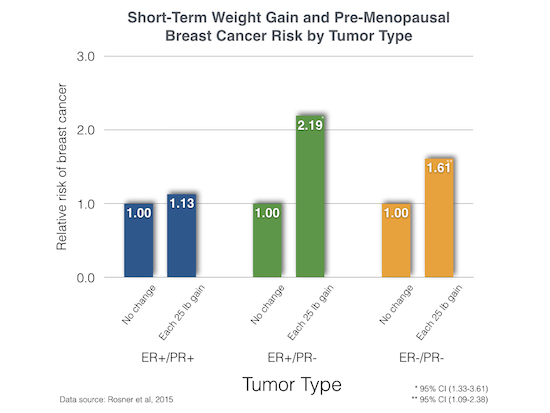
Though substantial weight gain is often something that happens over a relatively prolonged period, in the Nurses’ Health Study, we also assessed the potential impact of short-term recent weight gain on breast cancer risk (4). We looked at weight gain over 4 years, and the risk of cancer in the next 2 years. We found that short term weight gain increased the risk of premenopausal breast cancer, and that these risks were significant for two specific types of disease: ER+/PR- breast cancer and ER-/PR- breast cancer (see Figure 2). Compared to women who didn’t gain weight, the risk of ER+/PR- breast cancer was more than doubled with each 25 pounds gained over that period.

Figure 2

Why does this matter? Substantial weight gain in premenopausal years increases the risk of hard to treat breast cancer, such as ER-/PR- disease, and also conveys future cancer risk as women pass through into the postmenopausal years 4. While weight loss after menopause can substantially reduce breast cancer risk, perhaps by up to a half (see Figure 3) (3), avoiding weight gain is clearly preferable. Weight, once put on, can be hard to lose, and maintaining a lifelong healthy weight has the added benefits of improving quality of life and lowering the risk of many other cancers as well as other serious diseases, like diabetes, heart disease, stroke, and osteoporosis (5).
Figure 3

Prevalence and disparities in weight status

Weight gain, unfortunately, is a very common problem in the United States, and it is not one borne equally across society (6). While black and white boys show similar weight distribution from ages 5 to 17, black and white girls differ in weight starting around age 9, with black girls on average heavier than white girls. This difference continues to increase through age 17.

Weight gain through childhood and adolescence may reflect external circumstances – which can include factors like affordability of healthy food choices, availability of safe places to play/exercise, exposure to marketing of unhealthy foods, and parent/guardian time-constraints (7,8).

And many of the disparities in weight distributions in youth – and the social and physical environmental factors that help contribute to them – continue through the adult years.

Our recent analysis of national United States data (National Health and Nutrition Examination Survey) shows that African American women have had an overall higher prevalence of overweight and obesity compared to non-Hispanic white women over the past 20 years (see Figure 4) (9). The data also show that the prevalence of overweight and obesity in African American women exceeds that of non-Hispanic white women when looking at adults under age 50 and age 50 and over (see Figure 5). To be heavier as a group before age 50 implies continuing excess weight gain through the premenopausal years.

Figure 4 - Overall changes in weight status over the past 20 years. Source: Yang and Colditz, 2015

Figure 5 - Weight status by age – under age 50, age 50 and over. Source: Yang and Colditz, 2015

In a recent paper in the American Society of Clinical Oncology’s ASCO Post , I wrote about the excess rate of hard to treat breast cancers in African American women and that such hard to treat tumors are one likely reason that African American women experience higher rates of breast cancer mortality than do non-Hispanic white women. And growing data, already discussed, suggest that unhealthy weight may be a contributor to the risk for such hard to treat cancers.

So, while overweight is a key driver of breast cancer risk and poorer outcomes for all women, particular emphasis is needed on efforts that narrow the weight status and health disparities seen between races and ethnicities, improving outcomes across the board.

To successfully tackle the issue of overweight in such a way will require political will and multidisciplinary efforts that are focused not just on individual behaviors but also on the important physical, social, and healthcare environments that can be key barriers to or facilitators of individual actions on diet and physical activity.

It is a tall order but one certain to pay off many times over.


References

1. International Agency for Research on Cancer. Weight Control and Physical Activity. Vol 6. Lyon: International Agency for Research on Cancer; 2002.

2. Chan DS, Vieira AR, Aune D, et al. Body mass index and survival in women with breast cancer-systematic literature review and meta-analysis of 82 follow-up studies. Ann Oncol. 2014.

3. Eliassen AH, Colditz GA, Rosner B, Willett WC, Hankinson SE. Adult weight change and risk of postmenopausal breast cancer. JAMA. 2006;296(2):193-201.

4. Rosner B, Eliassen AH, Toriola AT, et al. Short-term weight gain and breast cancer risk by hormone receptor classification among pre- and postmenopausal women. Breast Cancer Res Treat. 2015;150(3):643-653.

5. Willett WC, Dietz WH, Colditz GA. Guidelines for healthy weight. The New England journal of medicine. 1999;341(6):427-434.

6. Rosner B, Prineas R, Loggie J, Daniels SR. Percentiles for body mass index in U.S. children 5 to 17 years of age. J Pediatr. 1998;132(2):211-222.

7. Swinburn BA, Sacks G, Hall KD, et al. The global obesity pandemic: shaped by global drivers and local environments. Lancet. 2011;378(9793):804-814.

8. Blumenthal SJ, Hoffnagle EE, Leung CW, et al. Strategies to improve the dietary quality of Supplemental Nutrition Assistance Program (SNAP) beneficiaries: an assessment of stakeholder opinions. Public Health Nutr. 2014;17(12):2824-2833.

9. Yang L, Colditz GA. Prevalence of Overweight and Obesity in the United States, 2007-2012. JAMA Intern Med. 2015.

Thursday, October 22, 2015

Practical Steps to Prevent Breast Cancer: Day 2 - Be Physically Active

It's day two in our nine day series highlighting key steps and practical tips that can help women lower their risk of breast cancer. Previous days.  
_  _  _  _

Day 2 - Be Physically Active


Exercise is as close to a silver bullet for overall good health as there is, and those benefits certainly extend to breast cancer. Women who are physically active for at least 30 minutes a day have a significantly lower risk of the disease than those who don’t. Regular exercise is also one of the best ways to help keep weight in check.


Tips and Tricks – Physical Activity

Choose activities you enjoy. When thinking about physical activity, it’s easy to conjure up unpleasant images: pained faces at the end of a marathon or grunting athletes at the gym. It’s no wonder exercise gets a bad rap. But, in reality, exercise can be really enjoyable. It’s just a matter of picking the right activity. Whatever gets you moving at a hard enough effort, counts towards your 30 minutes a day. The talk test is the best way to know if you’re going hard enough. If you can talk while you’re exercising, but can’t sing, that’s perfect. And there are a lot of activities that can put you right in that sweet spot - walking, cycling, dancing, playing tennis, even certain types of gardening and housework.

Make exercise a habit. There are good habits and bad habits. And if you’re like most folks, you have a mix of both. One thing that all types of habits share, though, is power. No matter how busy we get, or how crazy life is, we can almost always fit in our habits day in and day out. Making an effort to turn exercise into a habit can be a powerful tool in the fight against breast cancer and other serious diseases. So how do you do that? The best way is through consistency. Try going to the gym each day at lunchtime or taking a walk regularly after dinner. You may not always feel like doing it, but by doing it nevertheless, it’ll become ingrained into your day. Before you know it, a day won’t feel normal if you didn’t get in your walk, run, or trip to the gym.

Stay motivated by exercising with someone. Friends, family, and workout partners keep you honest. So one of the best ways to make sure you fit in your regular physical activity is to have a standing date to work out together a few days each week. It can be a lunchtime walk, a spin class, or a ballroom dancing class. The most important thing is to set the date and keep it. If you don’t, you’re likely to hear about it.

Get a pedometer and shoot for 10,000 steps each day. If you’re looking for a great way to stay motivated, it’s hard to go wrong with setting a goal of getting 10,000 steps each day. This has become a standard for a healthy activity level and includes all the steps you take – at work, at home, at the park, at the grocery store. To get started, all you need to do is buy an inexpensive pedometer (good ones start at $10), put it on at the beginning of each day, and keep moving until is ticks over 10,000. You’ll be surprised how that simple little plastic pedometer can keep you on track with your exercise goals.

Do healthy activities with your kids. Life with little kids can be exhausting and leave very little time for regular exercise. One of the best ways around this is to do healthy, activities with your kids. Whether it’s riding bikes together, going for a run with them in the jog stroller, or just playing tag at the park – the important thing is that you get your exercise, and the kids do, too. Together, you build a fantastic family habit of activity and exercise.

Next Steps – Physical Activity

Looking for more in-depth information on physical activity? Here are some good sources:

National Heart, Lung, and Blood Institute
http://goo.gl/AMexBS

ChooseMyPlate.gov
http://goo.gl/Yv0wMM

Friday, September 25, 2015

Physical Activity and Cancer Prevention: "Step It Up!" Walking Campaign

by Katy Henke

In early September 2015, Vivek Murthy, MD, the Surgeon General of the United States, began a national campaign to increase the amount of physical activity Americans engage in each day (see video below).  The campaign, called Step It Up!, works not only to get Americans walking more but also to help facilitate walking by increasing the number of safe and reliable walking paths in people's cities and neighborhoods (see video below).

Convincing evidence shows that exercise can lower the risk of breast, colon, and uterine cancers (1). Many national organizations, such as the Centers for Disease Control (2), recommend at least 30 minutes of moderate to vigorous physical activity at least 5 days per week to help prevent cancer.

Even if walking's not your thing, there are many other ways to take part in the Step It Up! campaign while reducing your cancer risk. Choose any physical activity you enjoy, such as gardening, cycling, or dancing. And try doing these activities with someone else to keep you motivated.

For long lasting health effects, make your exercise routine a habit in your household. Set aside time each day to ensure you are able to make exercise a health priority. If you feel overwhelmed at exercising that much at one time, break up your routine into 10 minutes, three times a day in order to meet your goal. For those adults who have children, walk with them to school in the morning and encourage outside activities when appropriate. Healthy habits can start at a young age too, and help reduce their risk of cancer.

In addition to helping prevent cancer, regular exercise has other great benefits, including (3):
  • Helping with weight control
  • Reducing the  risk of cardiovascular disease, type 2 diabetes
  • Strengthening  muscles and bones
  • Improving  mental health and mood
  • Improving ability to complete daily tasks


To learn more:

Step It Up! walking campaign 

8IGHT WAYS to Stay Healthy and Prevent Cancer.


References

1. World Cancer Research Fund; Continuous Update Project. Cancer Prevention & Survival: Summary of global evidence on diet, weight, physical activity & what increases or decreases your risk of cancer. September 2015 Edition. http://www.wcrf.org/sites/default/files/CUP-Summary-Report.pdf

2.  Center for Disease Control and Prevention. How much physical activity do adults need? 2015 Jun 4. http://www.cdc.gov/physicalactivity/basics/adults/.

3.  Center for Disease Control and Prevention. Physical activity and health. 2015 Jun 4. http://www.cdc.gov/physicalactivity/basics/pa-health/.

Monday, January 5, 2015

New Study Shows Being Sedentary is Bad for Physical and Fiscal Health

Creative Commons photo (cropped): Flickr/hjl
There is no magic bullet that will guarantee good health.  That's just an unfortunate fact of life.  But there is something that can help stave off heart disease, diabetes, cancer, osteoporosis, and depression, while also helping us maintain a higher quality of life as we get older.  And it's largely free and accessible to just about everyone: physical activity.

We've written a lot over the years here on Cancer News in Context about the benefits of being active, but not very much about the economic costs of being inactive - both for individuals and for the nation as a whole.  Yet, with the nation growing older and health care costs continuing to accelerate, there's a fantastic need to highlight effective and simple approaches to address such issues. And a new study out this month in Progress in Cardiovascular Diseases highlights just how important regular physical activity is to the physical and economic health of the nation.

Wednesday, December 10, 2014

The Power of Youth: Beginning Breast Cancer Prevention in Childhood

Creative Commons photo: Flickr/CatDancing (cropped)
We've written a lot recently about the importance of breast cancer prevention starting early in life, both here on Cancer News in Context and in a guest post on the American Association for Cancer Research blog, Cancer Research Catalyst.  Though most breast cancer research focusses on women in midlife and older, more and more evidence supports the years between early adolescence and when a woman has her first child as key to laying down risk for breast cancer later in life.  Breast tissue in these years appears to be particularly vulnerable to certain risk factors that can have a durable influence on risk.

Diet and physical activity seem to be especially key in youth.  Eating foods rich in vegetable protein and low in animal products can help lower risk -- as can being physically active and keeping weight in check.  For teens and young adult women, avoiding alcohol - or at a minimum avoiding heavy drinking - is also important.

Our overarching message is that to optimize breast health a healthy diet, regular physical activity, and healthy weight are key habits that should begin in - and be fostered throughout - childhood and into adolescence and beyond.  Prevention is something that can almost never start too early.

A pie chart we use to illustrate the power of breast cancer prevention starting in childhood shows that healthy behaviors starting as early as age two years old could help avoid 68 percent of breast cancers (see figure).  The idea of beginning breast cancer prevention at two can seem extreme and has struck a chord with the media (see image).  And in many ways that is understandable, since breast cancer is a disease that seems so far off - striking most women much later in life - and breasts don't even fully develop until the teen and young adult years.

Yet, we know that healthy behaviors aren't easily turned on and off like spigots.  Healthy behaviors are learned over time, and the sooner in life they are set, the more likely they are to be carried on throughout childhood and into adulthood, and the more likely they are to have a positive impact on long term health.  This is why the Dietary Guidelines for Americans apply to everyone age two years old and over.  That breast tissue seems particularly vulnerable in youth and young adulthood adds even more reason to begin good breast health habits as early as possible.


For parents, the key is simply to help their children make healthy choices that they can follow throughout life.  This will not only help them lower their risk of breast cancer as adults, but also heart disease, stroke, diabetes, osteoporosis, and even depression.

See the excerpt below from our upcoming book on breast cancer prevention for breast health tips for the parents of young girls.

#     #     #

Young daughters (2 years – 10 years)

As challenging as the period between ages 2 years old and 10 years old can be as a parent, it does offer some sense of control and the ability to steer your children in positive directions.

Within reason, the food you put on the table is the food they will eat and likely come to enjoy – even if it can take some struggling, pouting, and tears along the way, from them, and you. Similarly, if you’re a family that plays at parks and goes for walks throughout the week, that’s something that will become ingrained in a child as well and something they’ll likely wind up doing throughout their lives and eventually with their own children.

With young daughters, there are three simple things to focus on: healthy activity, healthy food, and healthy weight. Pretty straightforward stuff, but in today’s busy world where both parents often work and have very little time to think about such things, they can be much easier said than done.

Luckily, creating a healthy environment for our children isn’t very complicated or time-consuming - with a little planning and a little effort.

Let little legs move

We can easily get caught up in all the detailed recommendations we read about physical activity. Moderate intensity. Vigorous intensity. Aerobic. Strength. X number of minutes a week. And, yes, those can be important, but when it comes to young kids, it’s really less about making our kids reach some time targets for activity than it is about simply giving kids the opportunity to be kids. Because being active is really their natural state.
  • Be physically active as a family, every day if possible. Go on walks, ride bikes, shoot hoops, dance – whatever gets everyone moving.
  • Encourage children to play outside (when it’s safe) and to take part in organized activities, including soccer, gymnastics and dancing. 
  • Walk or ride bikes with your kids to school in the morning. 
  • Find safe places for children to play when weather is really bad: indoor playgrounds, YMCA, shopping malls.

Freeze the screens

Children grow up as digital natives these days, but that doesn’t mean that all that screen time doesn’t have health repercussions. Too much screen time takes time away from physical activity and can promote unhealthy eating.
  • Limit TV, tablet, computer, and other screen time to under 2 hours a day. The less the better.
  • Keep TV, tablets, and smartphones out of children’s bedroom’s. 
  • Choose one day each week to go TV and tablet-free as a family. Board games and family book or cooking clubs are great screen-time alternatives.

Offer a lot of plant foods

When it comes to promoting breast health later in life, getting daughters to eat a lot of plant-based foods early in life is likely important. This means focusing on fruits, vegetables, nuts, whole grains, and eating less full-fat dairy and meat.

  • Make fruits and vegetables a part of every meal. Put fruit on cereal. Cut up vegetables as a snack. 
  • Dice vegetables into soups, sauces, even batters. It’s an easy – and tricky - way to add more veggies to meals. 
  • Keep fruit out where kids can see it: on the counter, on a desk, in a backpack. If they can see it, they’re more likely to eat it.
  • Offer whole-grain cereal, brown rice and whole-wheat bread over refined choices, like white rice and white bread. 
  • Keep sugary drinks, like sodas, fruit drinks, and energy drinks to a minimum.
  • Try a meat-free week. The family just might like it.
  • Make dishes made with olive or canola oil, which are high in healthy fats. 
  • Cut back on full-fat dairy, fast food, and store-bought snacks (like cookies), which are often high in unhealthy fats.

Don’t obsess but keep track of weight

Weight is clearly a loaded issue, especially for girls. And it’s important not to create or perpetuate in your daughters – or any girls for that matter – unhealthy body image. In today’s world of Photoshopped models and selfies, females of all ages have a hard enough time comparing themselves to unreal expectations of beauty and body size.

At the same time, however, it’s important for parents to be aware of their daughter's weight and to know whether it may be too low, too high, or in the normal range. Surprisingly, studies show that many parents have trouble knowing if their child is an unhealthy weight or not. So, simply knowing can be a victory in itself.

A good place to start if you have questions about your child’s weight is the CDC’s BMI Calculator for Child and Teen. This tool uses a special calculation of weight, height, gender, and age to estimate whether a child is underweight, normal weight, overweight, or obese. Because children are still growing and developing, these labels are not always perfectly accurate, so it’s important to bring up any concerns about your child’s weight directly with a healthcare provider.

  • Keep track of your child’s weight and bring up any concerns with a health care provider.
  • Help your daughter focus on healthy food choices and healthy activities rather than on weight and body image.
  • Give your children the chance to be physically active every day.
  • Limit sweets and processed foods, which are often high in calories as well as carbohydrates that can stimulate hunger.
  • Limit TV, tablet, computer, and other screen time to under 2 hours a day. The less the better.
  • Help your children get enough sleep by setting a bed time and sticking to it every day. Keeping electronics out of the bedroom also helps with sleep.
Friday, October 10, 2014

Breast Cancer Prevention Now

By Graham A. Colditz, MD, DrPH


It is time to bring our focus back to lowering the risk or reducing the onset of new cases of breast cancer at all ages. Worldwide incidence of the disease is rising as societies across the globe modernize, which brings with it higher rates of breast cancer risk factors, such as overweight, lack of physical activity, and key reproductive factors like beginning families later in life and have fewer children.

While modernization has many important benefits, it is also directly driving up the risk of breast cancer. Globally, one in every four new cancers diagnosed in women is breast cancer, and over 1.7 million new cases are diagnosed each year.

We need a global breast cancer prevention strategy - now.

We currently understand how the longer interval from first menstrual period (menarche) to first baby increases lifetime risk for beast cancer. This interval has expanded over centuries in Western Europe following the Industrial Revolution, and - in dramatic fashion - over just a few decades in Asian countries. Data from China and Korea show a rapid decline in age at first menstrual period since World War II, as well as a decline in number of children, which has accelerated. The age women have their first babies is now above the Organization for Economic Cooperation and Development (OECD) average of 28 years old. This means that a typical woman has 16 or more years between her first period and her first baby (first birth at 28 minus first period at 12 years of age). In 1950 in China, this interval was just three years (first birth at 19 minus first period at 16).

Given these social movements, are there approaches early in life that can help mitigate the impact of these changes in reproductive factors? It appears so.

We, and others, have studied diet and physical activity as two key aspects of lifestyle, and then alcohol intake in later adolescence and early adult life.
  • Eating a diet high in fiber and vegetable protein is related to significantly lower risk of both premalignant breast lesions and breast cancer.
  • Being more physicaly active from ages 12 to 22 is powerfully protective against breast cancer.
  • Avoiding alcohol before first pregnancy is strongly protective against both benign breast lesions and invasive breast cancer.
Together, we need to work to improve diet in children, adolescents, and young adults – fostering access to, and consumption of, fruits, vegetables, and whole grains – as well as reducing alcohol intake among women under age. Especially for high school- and college-aged women, we must create an environment that encourages less alcohol intake. Also important is sustaining physically active lifestyles through the adolescent and early adult years, which has both immediate and long-term benefits.

Multifaceted approaches are needed to achieve such behaviors across a broad set of the population, but doing so will have lasting benefits, not only for breast cancer but also colon cancer, heart disease, stroke, as well as mental health. Momentum in this direction can take time to gather, but is achievable and important, and can have a positive impact for generations to come.

Related posts

Thursday, January 5, 2012

Confronting the challenges of 2012 with salads and stairs

In Sunday's New York Times, the editors ask prominent economists to weigh in on how to face the economic challenges ahead of us in 2012.  Richard Thaler, of the University of Chicago, who wrote (with Cass Sunstein) Nudge, the best selling book on behavioral economics argues that employers have the opportunity to tackle one of our biggest challenges, health care spending.  Employers are choice architects - they can make changes in how choices are offered that make one choice easier, or the default.  Thaler argues that by making a few changes, employers can improve workers' health, leading to greater productivity, fewer sick days, and lower insurance costs.


First, Thaler argues, make eating at work easier, by prominently featuring a variety of healthy options and putting in an attractive salad bar before the burger line.  How might this look in real life? Let me use the cafeteria at my office as an example.  

There are at least four cafeterias on our hospital/medical school campus and they aren't all run by the same people, so the situation likely looks different on the other side of campus, but this is what it looks like in the cafeteria that sits right under my office and nearest the cancer center.  The first thing you see when you walk in, is the grill/fry-o-later area.  Serving up burgers, hot dogs, fries and onion rings, it invariably has a long line, which makes it easy to miss that there is a sandwich counter immediately to your left.  The sandwich counter is hidden behind a high wall and camouflaged further by shelves of chips and candy, so unlike in many sandwich shops, you can't see the choices.  You can see two featured sandwiches.  Sometimes one is healthy, but not always.  Just past the sandwiches (and around the candy display) is the hot meal counter, which features one Weight Watchers entree each day.  This may reflect my own food preferences, but I rarely find this entree to look very appetizing or particularly healthy (I realize “healthy” can have lots of different meanings, but something high in cheese and refined grains rarely meets my metric).  To the far right of the sandwich bar is the pizza station, which usually features 3-5 types of pizza (most laden with meat) and another cheesy doughy option, like calzone, daily. Across from the sandwich bar is the featured entree special of the day.  The days I've visited in recent memory this has been: nachos loaded with ground beef and processed cheese of the orange variety ( which I confess to finding appealing on Super Bowl Sunday, but I'm not kidding myself about it fitting in the healthy realm and I accept the health consequences of my choice), and beef stir fry laden with sauce of the kind women's magazines regularly tell readers to avoid choosing when dining out, roast beef covered with gravy and accompanied by mashed potatoes. Just past the featured entree is the salad bar. I think most cafeterias these days have a salad bar, but having a salad bar and having an “attractive” salad bar are not the same thing. To their credit, since I started at my office nearly 5 years ago, the cafeteria has added mixed greens and baby spinach as daily options, offering something other than the white-ish iceberg lettuce of the early days. And there are proteins in the salad bar choices - typically hardboiled eggs, one type of canned bean and diced turkey or tuna. But the salad bar is a long way from what I’ve seen else where and a long way from allowing you to create the kind of salad you might get down the street at one of the neighborhood sandwich shops. Dried fruit? Nope. Other kinds of fruit? It is on the other side and is charged at a different rate. Nuts? No, but there are sunflower seeds. Cheese? Yes, there is usually grated orange cheese. I give the cafeteria credit, I can definitely create a greek salad for myself that rivals that fancy sandwich shop on the corner (with the possible exception of the tomatoes that always look a bit iffy) at a fraction of the cost. But it doesn’t look “attractive” and I’ve got to do all the work, which perhaps explains why there is never a line at the salad bar and I am 10 times more likely to see the people in front of and behind me at the checkout with fried chicken than a salad. This, I think, gets to the fundamental point - if you want people to make the healthy choice you have to make it easy and attractive.

What about Thaler’s other suggestions? His second is making exercise easier. The health benefits of exercise, as we have said many times on CNiC, don’t require marathon duration or rigor. Walking is enough. And many employers subsidize gym memberships or arrange discounts, including mine. But you shouldn’t have to leave work to get a little walk in - making stairwells attractive is one way and the suggestion Thaler focuses on. In our conglomerate of old and new buildings, my workplace has lots of unattractive stairwells that are often hard to find. At a previous job, I had the privilege of sitting on a committee that was thinking about how to design a new hospital building and one of the most compelling ideas I heard was to make the stairwells front and center - highly visible and the easiest choice (instead of pushed off into the corner and behind a heavy metal door). One of our newest buildings on campus, which also serves as the home to our outpatient cancer care, has a lovely open stairwell at one end of the building, easily visible from the entrance. I enjoy seeing staff using the stairs and leaving the elevators to our patients, many of whom aren’t well enough to climb the stairs to the upper floors of the building. As we embark on a series of renovations and construction of new facilities as part of the 10 year plan, I look forward to seeing how our leadership makes stair use an easy option. In addition, our campus has launched a series of paths around the area (affectionately called “Tread the Med”) to allow staff and visitors to take walking breaks or have walking meetings (as Thaler plans to do in 2012). We have often used these exact “paths” around campus for our walking interventions during inclement weather and they are a great resource. I applaud the leaders who thought to leverage the bridges and hallways that link our conglomerate of old buildings as a means to promoting activity! Combined with easily located, accessible and attractive stairways, our step counts on campus should continue to rise.

Since most Americans spend more waking hours at work than at home, the role of our employers and workplaces at making healthy choices easy (or at least easier) can’t be underestimated. As part of our new TREC @ WUSTL center, our colleagues are examining just this - workplace policies that impact obesity, diet and physical activity.

Monday, August 8, 2011

Rest NOT Best

Following closely on the heels of the American College of Sports Medicine Exercise Guidelines for Cancer Survivors, MacMillan Cancer Support in the UK this week is launching a Move More campaign designed to get cancer survivors up and moving and debunk the notion that rest is best for cancer survivors during and after treatment. As part of that MacMillan reviewed the evidence supporting a role for exercise in survivors. Expanding on the ACSM focus on clinical trials, the MacMillan report includes observational data – notably that showing that exercise reduces risk of recurrence and death in breast, colorectal and prostate cancer survivors. The MacMillan website holds a wealth of information, directed at survivors, on how to go about safely being active.

The benefits of activity, what we mean by activity, how to safely be active and how to get started are all covered in great detail.

Dr. Robert Thomas, a medical oncologist, sums it all up nicely in this video.

For other ways to stay healthy after a cancer diagnosis, check our our Cancer Survivors' 8 Ways. For more on how exercise can help prevent cancer, click over to the video from our 8 ways campaign.

Wednesday, March 16, 2011

Physical activity prevents colon cancer


In a detailed review of evidence from 20 studies one of us, Kathleen Wolin, reports that higher levels of physical activity protect against colon cancer (see study) and now the precursor lesions, colon polyps (see study) . The evidence is consistent across study design, approaches to assessment of physical activity, and the populations studied.  Key features of this extensive review include the thorough search of the literature and use of state of the art statistical approaches to combine the evidence on activity and colon cancer risk.

By evaluating both colon polyps, the precursor lesion from which the majority if colon cancers develop, as well as colon cancer, Wolin is able to show that sustaining activity over the lifetime will lead to the greatest reduction in colon cancer. The parallel evidence from our previous work estimating the overall benefit of activity against colon cancer,  sustained activity at the level of one hour of walking per day from age 30 to age 70 will reduce colon cancer by half compared to those who do not exercise at all (see table of results). This significant 50 percent reduction in new cases of colon cancer is a benefit that most of us can achieve. In addition, exercise reduces risk of heart disease and diabetes as well as other major chronic conditions. 

Colon cancer is largely preventable. In addition to a healthy diet, maintaining a healthy weight and being physically active, screening significantly reduces the risk of both the diagnosis of colon cancer and death from colon cancer. See our related post, 

New Results Further Confirm that Screening Prevents Death from Colon Cancer


Friday, February 18, 2011

New Maps, Same Problem: Inactivity

It's no real surprise.  Not only are most of us not getting enough exercise to meet health guidelines, a large chunk of us aren't getting any physical activity at all.  New data from the Centers for Disease Control and Prevention (CDC) show that 25 percent of adults spend none of their free time exercising or doing any other type of physical activity.

This rate, though, can vary greatly from region to region, and even county by county.  The latest report shows that some counties had inactivity rates as low as 10 percent, while others had rates as high as four times that.

As the map below shows (Figure 1), states with the highest rates of inactivity were largely in the south, while states on the west and east coasts had generally lower rates.  Not likely by coincidence, this clustering of inactivity tracks very closely with poverty rates (Figure 2) and highlights the multi-layered issues that come into play when it comes to health and disease.

Figure 1 - Physical Inactivity
Figure 2 - Poverty
Poverty, education, income, health care access, and quality of infrastructure (like sidewalks and bike paths) all play an important role in the healthy choices we make.  Yes, it all comes down to a personal choice - choosing to get out the door for a walk or sit on the couch and watch TV - but the healthy choice is always easier to make when the people, places, and policies that surround us support that choice.

Thursday, January 20, 2011

Canada needs to get moving, physical activity report shows


A new report released by Statistics Canada yesterday shows that the level of physical activity in the Canadian population is far lower than previously estimated (see report).

While Canada has used self-report to monitor the level of activity in the adult population and seen high levels of reported physical activity – in the new report barely one third of the population reached the target of 10,000 steps per day measured by pedometer. Many of us use a pedometer to monitor our daily level of activity – in this setting it was one of the measures to more directly assess the activity in the population.

Overall these data suggests that Canadians are not as active as national targets recommend for health benefits. Many benefits accrue from higher activity, including weight control, lower risk of heart disease, diabetes, and cancers of the breast and colon, to name a few.

With the New Year upon us, increasing our daily activity to achieve at least 10,000 steps per day gets us towards achieving some of these health benefits. It is never too late to begin being more active. As we have written previously, we have many tips to help you move towards these goals.

Related CNiC posts

Friday, January 7, 2011

How are those New Years' Resolutions?

If you needed another reason to lace up your sneakers and keep your New Years' resolution to be active, this week offered 2:

1) Our team published, in collaboration with colleagues at the American Cancer Society, research on the role of physical activity in colon cancer and colon cancer mortality. There is a strong and consistent body of evidence showing physical activity reduces colon cancer risk. This new study examined whether the consistency of physical activity matters.

We often get this question at CNiC - can I start now? Is it too late? What we found is that consistent physical activity does matter for colon cancer mortality. Does this mean if you haven't been active before now it is too late and you shouldn't bother starting? Absolutely not. It is important to look at this study in the context of the previous work and see the big picture -- physical activity matters for colon cancer risk and mortality. Starting earlier seems to be better, but it doesn't appear it is ever too late to start either.

And of course, the other thing to remember is that physical activity isn't just beneficial for colon cancer - it reduces risk of other cancers AND heart disease AND stroke AND diabetes AND osteoporosis. And physical activity improves the quality of life as well - you FEEL better.

2) Providing another reason to be active - colleagues of ours published a report on the benefit of physical activity after a prostate cancer diagnosis. Among men diagnosed with non-metastatic prostate cancer, those who were physically active after diagnosis were less likely to die and less likely to die of prostate cancer. Overall mortality risk was reduced with activity equivalent to 30 minutes a day of brisk walking. The study suggested more vigorous physical activity may be necessary to reduce risk of prostate cancer specific death.

When the days are short and the temperatures cold, it can be hard to find the motivation to be physically active, even for our team. As we've said before - anything that gets you up and moving is good - even short breaks. And if you think you don't have time, remember our tips. Physical activity is a place where you get enormous "bang for your buck!"

Tuesday, November 23, 2010

Even small breaks are good

A study out this month in the journal Cancer, Epidemiology, Biomarkers & Prevention reviewed the literature on sedentary behavior and cancer. Ten of the 18 studies included in the review found a significant positive association between sedentary behavior and cancer risk - specifically cancers of the colorectum, endometrium, ovaries and prostate. Sedentary behavior isn't just a lack of physical activity - it is prolonged sitting or reclining. Someone can meet the physical activity guidelines of 30 minutes of moderate intensity physical activity each day (e.g., a brisk 30 minute walk) and still be quite sedentary if s/he spends the rest of the day sitting.

This is why more and more public health advocates are touting the value of lifestyle activity - the movement associated with daily living. And some, like Dr. Toni Yancey, are taking it a step further and advocating we build purposeful movement focused breaks into our workplaces. In today's Personal Health column, Jane Brody highlights Dr. Yancey's efforts and her new book "Instant Recess". In her book, Dr. Yancey suggests building two 10-minute breaks of a fun group activity into the work day. These kind of programs have proven successful in the business world at improving the health of employees and at improving productivity. Similar programs in schools have been shown to improve learning.

The value of these recess/activity breaks at reducing cancer risk has yet to be shown, but with so many other positive outcomes - most notably feeling better, they seem like a great idea and one CNiC can definitely get behind!

Wednesday, October 6, 2010

Reduce risk of breast cancer through action today

Breast cancer prevention means taking action now. We talked about awareness earlier this week and have discussed drug strategies to reduce risk of breast cancer in high risk or postmenopausal women. But for every woman there are things to do now to lower risk.


  1. be active - increase your level of physical activity
  2. maintain a healthy weight
  3. cut down on the amount of alcohol you drink
Our web tools help you look at your risk compared to other women your age. We also provide some helpful background information. Above all, the message is clear that we can modify risk of breast and other cancers through changing the way we live. Sustained changes can dramatically reduce risk. Weight loss after menopause can halve the risk of breast cancer, for example. It is never too late to increase activity and maintain some weight loss. we describe strategies for increasing physical activity and weight loss in an earlier post.